
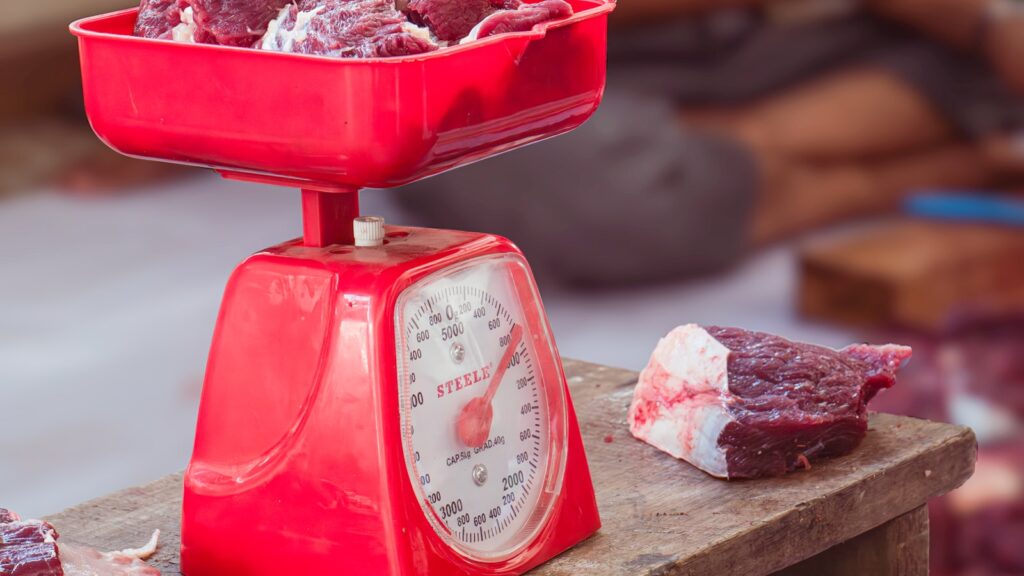
A rump steak is priced per kilo, cut by hand, and never weighs exactly what the website said. That single fact is why most butchers, seafood shops and delis give up on selling online, and why the ones who solve it end up owning their local market. We have built weighed-product stores for multiple Australian butchers on WooCommerce, synced to Wedderburn scales, and this post explains the three selling models that work, how to set them up, and how to charge the right amount when the scales disagree with the estimate.
The three ways to sell weight online
Every weighed-goods store online uses one of three models, often mixed across the catalog. Switch between them below to see how the same product reads to a customer:
Interactive: three selling models
Most of our butcher clients run a mix: fixed packs for mince and sausages, by the piece for steaks, and estimated weight for roasts, whole birds and anything cut to order.
Setting it up in WooCommerce
Show the per-kilo price honestly
Whatever the model, display the per-kilo rate. Shoppers compare against the supermarket shelf, and trade measurement rules expect unit pricing to be clear. A small snippet appends it from a custom field:
// Append "$32.99/kg" style unit pricing to the displayed price.
// Add a custom field _price_per_kg to weighed products.
add_filter( 'woocommerce_get_price_html', function( $price, $product ) {
    $per_kg = $product->get_meta( '_price_per_kg' );
    if ( $per_kg ) {
        $price .= sprintf(
            ' <small class="unit-price">(%s/kg)</small>',
            wc_price( $per_kg )
        );
    }
    return $price;
}, 10, 2 );
Let the POS own the product data
If your prices live in a scales system, do not maintain them twice. Our Wedderburn Atria connector carries the unit of measure (kg or pieces), unit weight and per-kilo pricing from Atria Manager into WooCommerce automatically, and pushes online orders back with each line’s PLU code and quantity in the right unit. The website becomes another scale on the network: same product file, same prices.
Charging the right amount when weights vary
Here is the moment that decides whether weighed selling works: the customer ordered about 500g, your butcher cut 465g. Try it, order an amount, then weigh the cut:
Interactive: order, then weigh
The certified scale at packing decides the final weight. That number, not the estimate, is what the customer pays.
There are three honest ways to settle that difference, and one of them is clearly best:
- Authorise then capture (our recommendation). Authorise the estimate plus a buffer at checkout, weigh at packing, capture the exact amount. The customer is charged once, for the scale weight. We cover the full flow in our post on authorise and capture payments for weighed products.
- Charge the estimate, refund the difference. Workable, but refunds cost fees, take days to appear, and never go the other way when the cut runs heavy.
- Round in the customer’s favour, always. Fine for low-variance items, but you lose a small amount of margin on every order.
Trust and trade measurement
Two things keep weighed selling clean in Australia. First, the final charged weight should come from your certified trade scale, which it does automatically when the POS reports the packed weight back to the website. Second, tell the customer exactly what will happen before they pay: “you will be charged for the exact weighed amount, estimated at $16.50” outperforms vague wording in both conversion and support volume. On our butcher builds that one sentence removed nearly all “why was I charged a different amount” tickets.
FAQ
Can WooCommerce handle decimal quantities like 0.5 kg?
Yes, with a small snippet or plugin that unlocks decimal quantity steps. In practice we usually avoid it: customers think in “about 500g” or “2 steaks”, so preset weight options or piece counts convert better than a decimal input.
How do I manage stock for weighed products?
Track stock in the same unit you sell. For estimated-weight products synced from a POS, inventory on hand comes down from the scales system, so the website simply mirrors it.
Does this only apply to butchers?
No. Seafood, delis, cheese shops, spice merchants, bulk food stores and garden suppliers all sell by weight, and the same three models apply.
We build this for a living
EUX has taken multiple weighed-goods retailers online: Boococks Quality Meats, Tender Gourmet Butchery and Dubbo Meat Centre among them, with POS-synced pricing, click and collect and exact-weight charging. If your counter deserves a website that works like it does, talk to us.